
AWS Certified Solutions Architect Associate · Free Practice Question Medium
Question 63
The engineering team at a social media company has noticed that while some of the images stored in Amazon S3 are frequently accessed, others sit idle for a considerable span of time.
As a solutions architect, what is your recommendation to build the MOST cost-effective solution?
-
A
Create a data monitoring application on an Amazon EC2 instance in the same region as the bucket storing the images. The application is triggered daily via Amazon CloudWatch and it changes the storage class of infrequently accessed objects to Amazon S3 One Zone-IA and the frequently accessed objects are migrated to Amazon S3 Standard class
-
B
Store the images using the Amazon S3 Intelligent-Tiering storage class
-
C
Store the images using the Amazon S3 Standard-IA storage class
-
D
Create a data monitoring application on an Amazon EC2 instance in the same region as the bucket storing the images. The application is triggered daily via Amazon CloudWatch and it changes the storage class of infrequently accessed objects to Amazon S3 Standard-IA and the frequently accessed objects are migrated to Amazon S3 Standard class
Reveal correct answer
Correct answer: B
Explanation
Correct option:
Store the images using the Amazon S3 Intelligent-Tiering storage class
The Amazon S3 Intelligent-Tiering storage class is designed to optimize costs by automatically moving data to the most cost-effective access tier, without performance impact or operational overhead. It works by storing objects in two access tiers: one tier that is optimized for frequent access and another lower-cost tier that is optimized for infrequent access.
For a small monthly monitoring and automation fee per object, Amazon S3 monitors access patterns of the objects in S3 Intelligent-Tiering and moves the ones that have not been accessed for 30 consecutive days to the infrequent access tier. If an object in the infrequent access tier is accessed, it is automatically moved back to the frequent access tier. Therefore using the Amazon S3 Intelligent-Tiering storage class is the correct solution for the given problem statement.
Amazon S3 Storage Classes Overview:
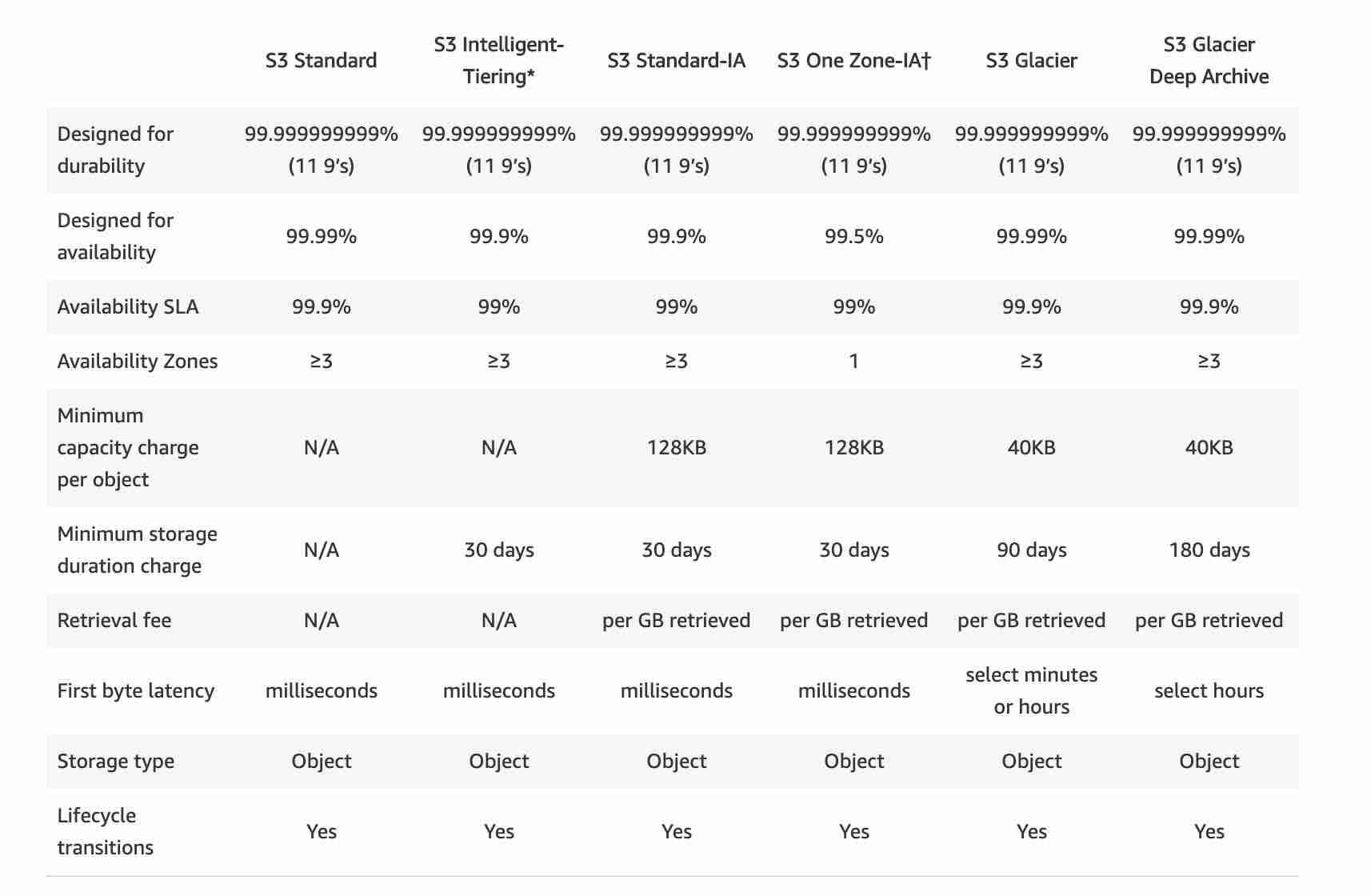
Incorrect options:
Store the images using the Amazon S3 Standard-IA storage class
Amazon S3 Standard-IA is for data that is accessed less frequently but requires rapid access when needed. Amazon S3 Standard-IA offers high durability, high throughput, and low latency of Amazon S3 Standard, with a low per GB storage price and per GB retrieval fee. This combination of low cost and high performance makes Amazon S3 Standard-IA ideal for long-term storage, backups, and as a data store for disaster recovery files. The minimum storage duration charge is 30 days. As some of the objects are frequently accessed, the per GB retrieval fee for Amazon S3 Standard-IA can cause the costs to shoot up, hence this option is incorrect.
Create a data monitoring application on an Amazon EC2 instance in the same region as the bucket storing the images. The application is triggered daily via Amazon CloudWatch and it changes the storage class of infrequently accessed objects to Amazon S3 One Zone-IA and the frequently accessed objects are migrated to Amazon S3 Standard class
Create a data monitoring application on an Amazon EC2 instance in the same region as the bucket storing the images. The application is triggered daily via Amazon CloudWatch and it changes the storage class of infrequently accessed objects to Amazon S3 Standard-IA and the frequently accessed objects are migrated to Amazon S3 Standard class
Creating a data monitoring application on an Amazon EC2 instance for managing the desired Amazon S3 storage class entails significant development cost as well as infrastructure maintenance effort. The Amazon S3 Intelligent-Tiering storage class does the job in a cost-effective way. Therefore both these options are incorrect.
Reference:
Discussion
Think the marked answer is wrong, or have a better explanation? Share it below — comments appear after review.

