
AWS Certified Solutions Architect Associate · Free Practice Question Medium
Question 25
An enterprise SaaS provider is currently operating a legacy web application hosted on a single Amazon EC2 instance within a public subnet. The same instance also hosts a MySQL database. DNS records for the application are configured through Amazon Route 53. As part of a modernization initiative, the company wants to rearchitect this application for high availability and scalability. In addition, the company wants to improve read performance on the database layer to handle increasing user traffic.
Which combination of solutions will meet these requirements? (Select two)
-
A
Use Amazon CloudFront with Lambda@Edge to serve dynamic content from EC2 instances located in different Regions
-
B
Migrate the existing MySQL database to an Amazon Aurora MySQL cluster. Deploy the primary DB instance and one or more read replicas in different Availability Zones
-
C
Deploy an additional EC2 instance in a different AWS Region, and configure Amazon Route 53 with a failover routing policy to direct traffic to the secondary instance during primary Region outages
-
D
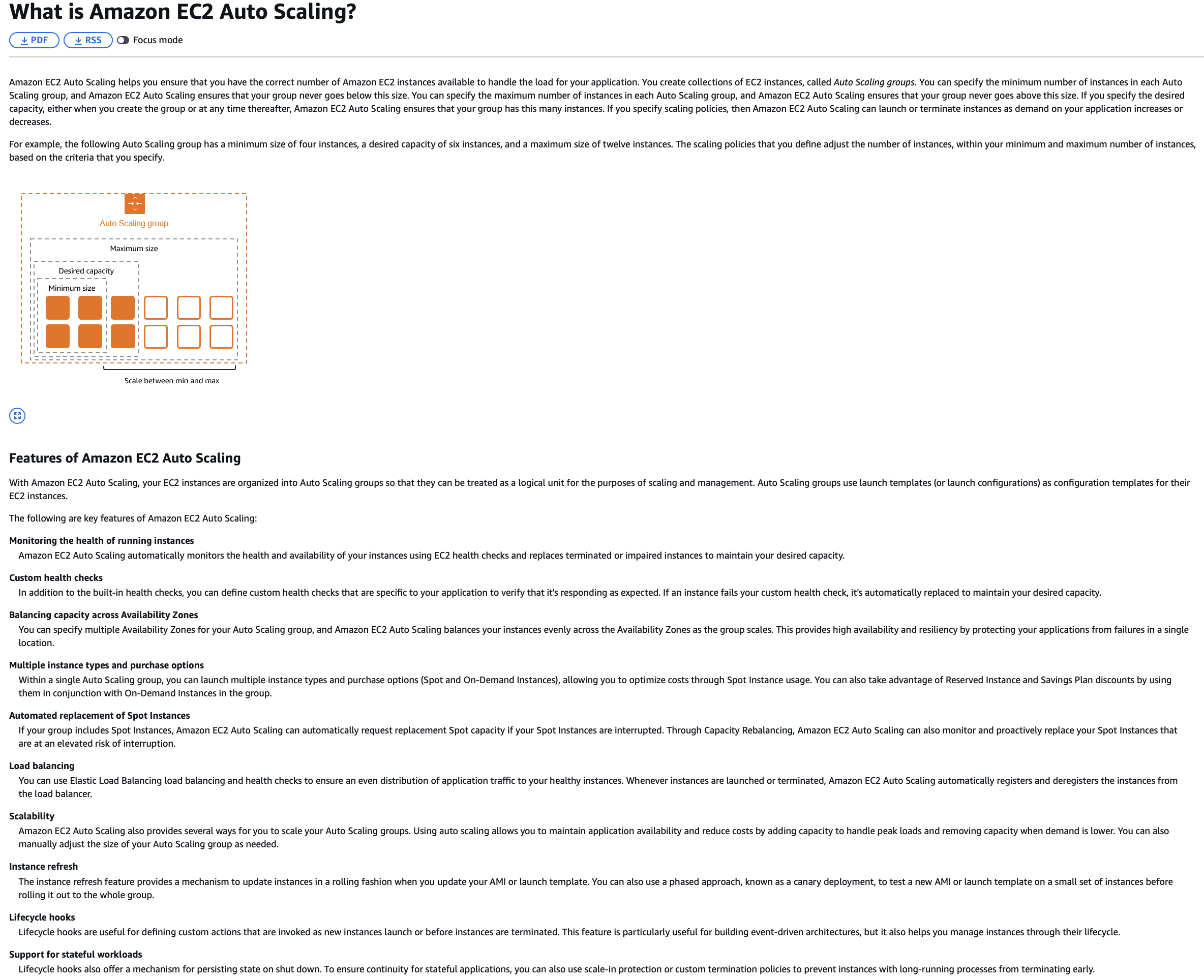
Use an Auto Scaling group to deploy EC2 instances across multiple Availability Zones within a single Region. Register the instances in a target group behind an Application Load Balancer to distribute web traffic evenly
-
E
Use an Auto Scaling group to deploy EC2 instances across multiple Availability Zones in two AWS Regions. Register the instances in a target group behind an Application Load Balancer to distribute web traffic evenly
Reveal correct answers
Correct answers: B, D
Explanation
Correct options:
Use an Auto Scaling group to deploy EC2 instances across multiple Availability Zones within a single Region. Register the instances in a target group behind an Application Load Balancer to distribute web traffic evenly
This option enhances scalability and high availability of the web application. Deploying EC2 instances across multiple Availability Zones ensures that the application remains available even if one Availability Zone experiences an outage. The Application Load Balancer (ALB) evenly distributes incoming web traffic across all healthy instances in the target group, improving performance and fault tolerance. The Auto Scaling group automatically adjusts the number of EC2 instances in response to changing traffic, reducing operational burden and costs while ensuring optimal performance.
Migrate the existing MySQL database to an Amazon Aurora MySQL cluster. Deploy the primary DB instance and one or more read replicas in different Availability Zones
This option addresses the need to reduce read latency and improve database availability. Amazon Aurora is a fully managed, MySQL-compatible relational database engine designed for high performance and availability. By deploying a writer (primary) instance and at least one reader instance in different Availability Zones, the application can offload read-heavy workloads to the reader instance, improving throughput and reducing response times. Aurora’s automatic failover capabilities also help ensure continued operation in the event of a failure of the primary instance. Aurora further supports features like replication, automatic backups, and storage autoscaling, reducing operational overhead.
Incorrect options:
Deploy an additional EC2 instance in a different AWS Region, and configure Amazon Route 53 with a failover routing policy to direct traffic to the secondary instance during primary Region outages - This setup lacks auto scaling capabilities. If traffic spikes in either Region, the architecture would require manual intervention or additional setup to scale. No Application Load Balancer (ALB) or Auto Scaling group is used in this option — which are best practices for horizontally scaling stateless workloads.
Use an Auto Scaling group to deploy EC2 instances across multiple Availability Zones in two AWS Regions. Register the instances in a target group behind an Application Load Balancer to distribute web traffic evenly - An Application Load Balancer operates only within a single AWS Region and can route traffic to targets in multiple Availability Zones within that Region, but not across Regions. So, this option is incorrect.
Use Amazon CloudFront with Lambda@Edge to serve dynamic content from EC2 instances located in different Regions - CloudFront is ideal for caching static content, but it’s not designed for dynamic database-driven applications hosted on EC2. Using Lambda@Edge for a database-backed application introduces architectural mismatches and increases complexity.
References:
https://docs.aws.amazon.com/autoscaling/ec2/userguide/what-is-amazon-ec2-auto-scaling.html
https://docs.aws.amazon.com/AmazonRDS/latest/AuroraUserGuide/CHAP_AuroraOverview.html
https://docs.aws.amazon.com/AmazonRDS/latest/AuroraUserGuide/Aurora.Replication.html
Discussion
Think the marked answer is wrong, or have a better explanation? Share it below — comments appear after review.

