
AWS Certified Security Specialty · Free Practice Question Medium
Question 5
An e-commerce company recently saw a huge spike in its monthly AWS spend. Upon further investigation, it was found that some developers had accidentally launched Amazon RDS instances in unexpected Regions. The company has hired you as an AWS Certified Security Specialist to establish best practices around the least privileges for developers and control access to on-premises as well as AWS Cloud resources using Active Directory. The company has mandated that you institute a mechanism to control costs by restricting the level of access that developers have to the AWS Management Console without impacting their productivity. The company would also like to allow developers to launch RDS instances only in us-east-1 Region without limiting access to other services in any Region.
How can you help the company achieve the new security mandate while minimizing the operational burden on the systems administration team?
-
A
Configure SAML-based authentication tied to an IAM role that has the AdministrativeAccess managed policy attached to it. Attach a customer-managed policy that denies access to RDS in any AWS Region except
us-east-1 -
B
Configure SAML-based authentication tied to an IAM role that has a PowerUserAccess managed policy and a customer-managed policy that denies all the developers access to any AWS services except AWS Service Catalog. Within AWS Service Catalog, create a product containing only RDS service in
us-east-1region -
C
Set up an IAM user for each developer and add them to the developer IAM group that has the PowerUserAccess managed policy attached to it. Attach a customer-managed policy that allows the developers access to RDS only in
us-east-1Region -
D
Configure SAML-based authentication tied to an IAM role that has the PowerUserAccess managed policy attached to it. Attach a customer-managed policy that denies access to RDS in any AWS Region except
us-east-1
Reveal correct answer
Correct answer: D
Explanation
Correct option:
Configure SAML-based authentication tied to an IAM role that has the PowerUserAccess managed policy attached to it. Attach a customer-managed policy that denies access to RDS in any AWS Region except us-east-1
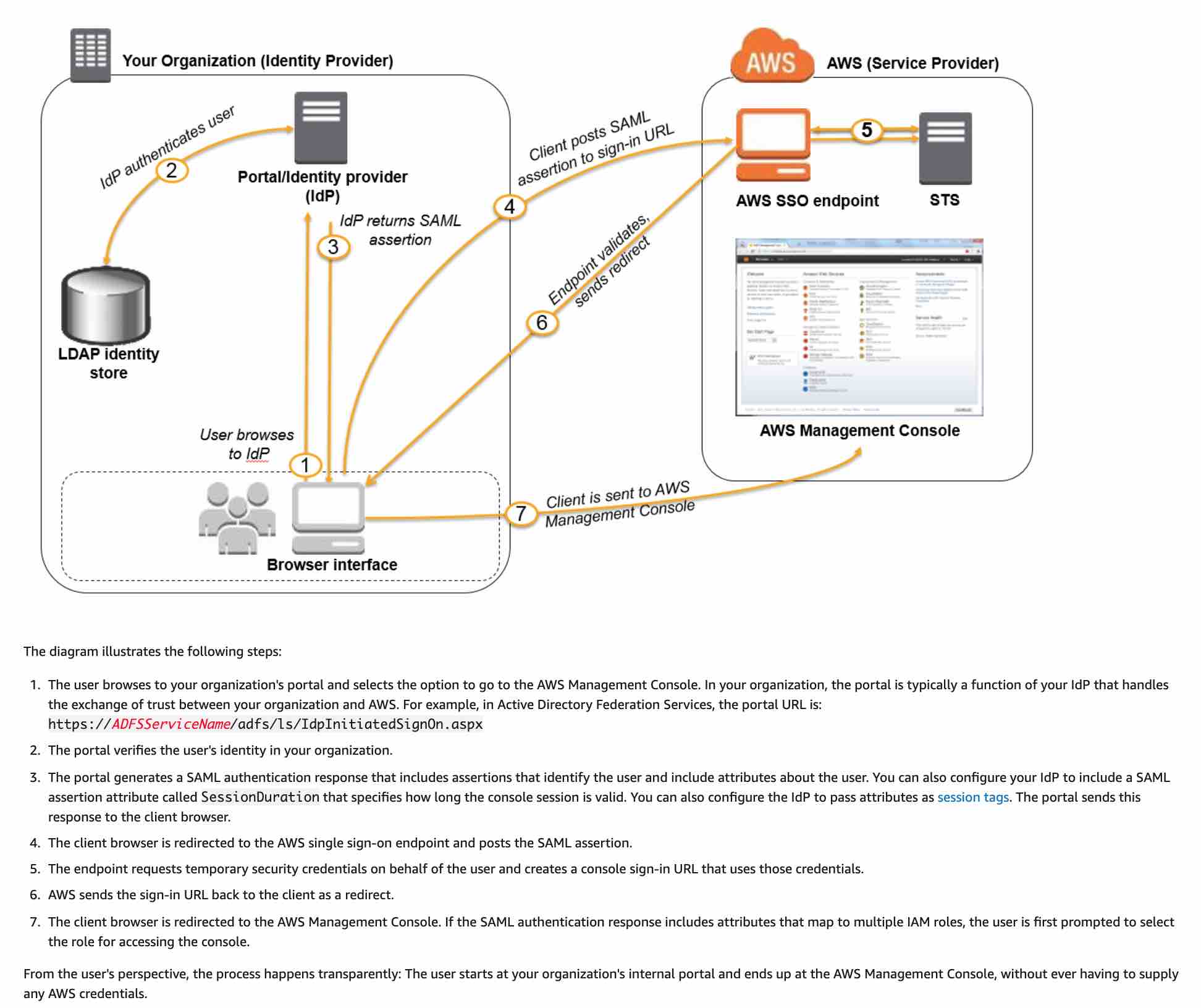
Security Assertion Markup Language 2.0 (SAML) is an open federation standard that allows an identity provider (IdP) to authenticate users and pass identity and security information about them to a service provider which is an AWS application or service for the current use case. With SAML, you can enable a single sign-on experience for your users across many SAML-enabled applications and services. Users authenticate with the IdP once using a single set of credentials and then get access to multiple applications and services without additional sign-ins.
For the given scenario, the company wants to control access to on-premises as well as AWS Cloud resources (specifically via the AWS Management Console) using Active Directory, so it should use SAML 2.0 federated users to access the AWS Management Console. You also create an IAM role with a trust policy that sets the SAML provider as the principal, which establishes a trust relationship between your organization and AWS. The role's permission policy establishes what users from your organization are allowed to do in AWS. In this case, the role will have a PowerUserAccess managed policy attached. As the PowerUserAccess managed policy will allow the developers to create RDS instances in any Region, therefore, you also need to attach a customer-managed policy that denies access to RDS in any AWS Region except us-east-1.
At a high level, it is useful to think of these access privileges in the form of this equation:
PowerUserAccess = AdministrativeAccess - IAM
Incorrect options:
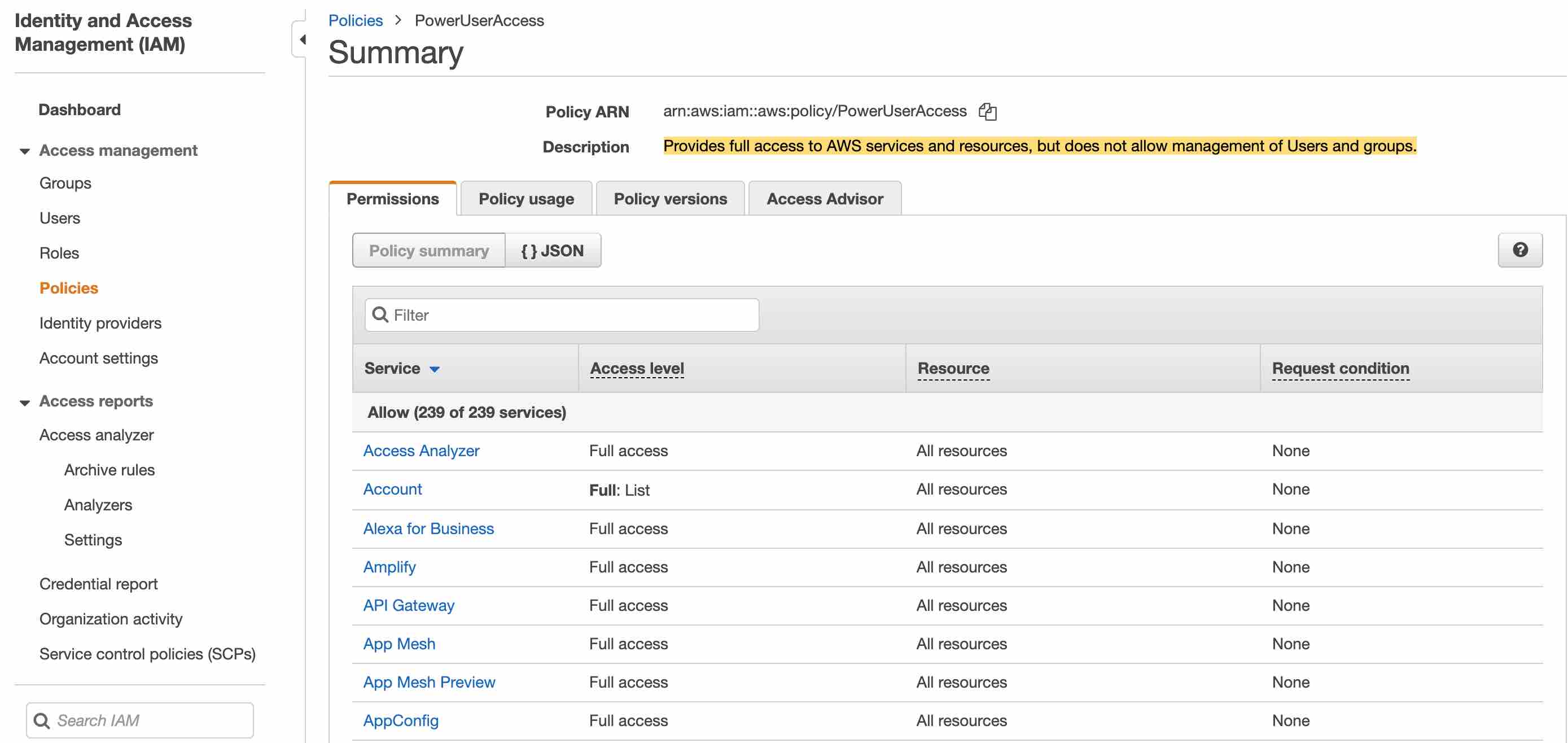
Configure SAML-based authentication tied to an IAM role that has the AdministrativeAccess managed policy attached to it. Attach a customer-managed policy that denies access to RDS in any AWS Region except us-east-1 - Using an IAM role with an AdministrativeAccess managed policy attache to it would violate the key requirement of providing the least privileges for developers. PowerUserAccess provides full access to AWS services and resources but does not allow management of users and groups.
At a high level, it is useful to think of these access privileges in the form of this equation:
PowerUserAccess = AdministrativeAccess - IAM
So, PowerUserAccess provides just the right access privileges required for the given use case.
Set up an IAM user for each developer and add them to the developer IAM group that has the PowerUserAccess managed policy attached to it. Attach a customer-managed policy that allows the developers access to RDS only in us-east-1 Region - Setting up an IAM user for each developer and adding them to the developer IAM group goes against the requirement of minimizing the operational burden on the DevOps team because this solution does not take advantage of the existing Active Directory that supports SAML-based authentication.
Configure SAML-based authentication tied to an IAM role that has a PowerUserAccess managed policy and a customer-managed policy that denies all the developers access to any AWS services except AWS Service Catalog. Within AWS Service Catalog, create a product containing only RDS service in us-east-1 region - This option is a distractor as it's too restrictive. As the customer-managed policy denies the developers access to any AWS services except AWS Service Catalog, therefore it would limit access to all other services in any Region, hence this option is incorrect.
References:
https://docs.aws.amazon.com/IAM/latest/UserGuide/id_roles_providers_enable-console-saml.html
https://docs.aws.amazon.com/IAM/latest/UserGuide/id_roles_providers_saml.html
Discussion
Think the marked answer is wrong, or have a better explanation? Share it below — comments appear after review.

